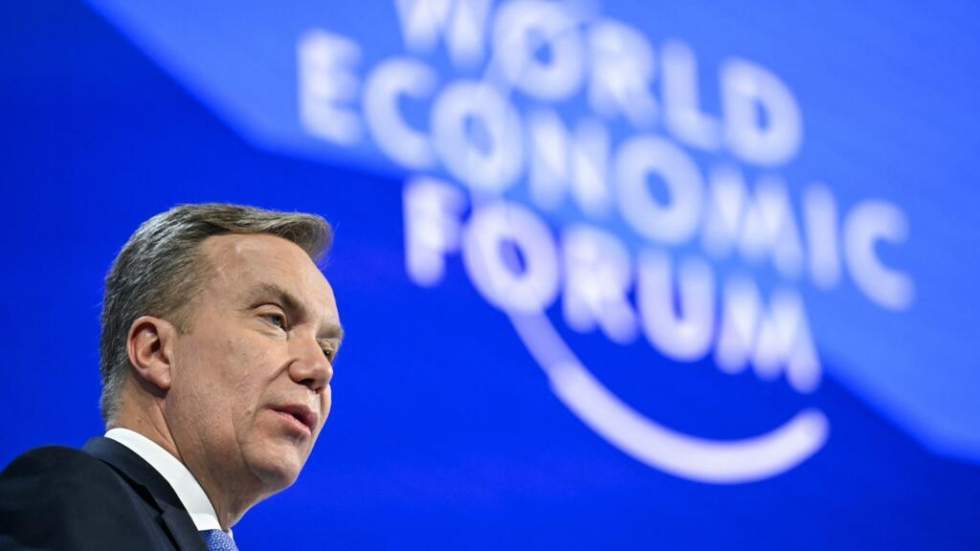
Børge Brende Steps Down as WEF President Amid Persistent Epstein Questions
The World Economic Forum (WEF) is facing a significant leadership transition following the announcement of Børge Brende's resignation as its President. Brende, who has led the prestigious organization since 2017, cited the potential for "distraction" from the WEF's core mission due to ongoing inquiries into his past interactions with convicted sex offender Jeffrey Epstein. This high-profile
démission Brende Davos has sent ripples through the global economic and political spheres, prompting discussions about leadership, reputation, and the enduring shadow of controversy.
Despite a comprehensive external investigation clearing him of any wrongdoing and the WEF's board expressing unanimous support for him to continue, Brende emphasized that the persistent focus on the Epstein matter risked overshadowing the Forum's critical work. His decision underscores the intense scrutiny faced by leaders of prominent global organizations and the profound impact of public perception, even in the absence of culpability.
The Lingering Shadow: Brende's Ties to Jeffrey Epstein
The controversy that ultimately led to Brende's departure centers on his encounters with Jeffrey Epstein, a figure whose extensive criminal activities have cast a long and damaging shadow across numerous institutions and individuals worldwide. The specifics of Brende's interactions were thoroughly reviewed by the independent law firm Simpson Thacher & Bartlett.
The investigation examined reports detailing meetings between Brende and Epstein in 2011 and 2012. More critically, it probed a period in 2014 when Brende, then serving as a Managing Director at the WEF, spent time with Epstein in New Zealand and Tonga. This latter interaction occurred *after* Epstein had already been convicted of sex offense charges, raising significant questions about judgment and awareness.
However, the external review's findings were clear:
- There was no evidence suggesting Brende was aware of Epstein's criminal activities before 2012.
- The investigation found no proof that Brende participated in any illegal activities during his interactions with Epstein.
- Crucially, there was no indication that Brende attended meetings involving Epstein's victims.
While these conclusions exonerated Brende from any direct involvement in Epstein's crimes or knowledge of them at the relevant times, the sheer persistence of the questions, fuelled by media reports and public discourse, proved to be an insurmountable hurdle. Brende’s statement highlighted this unavoidable truth: "Despite the unanimous support from the Board to continue leading the Forum and the absence of any finding of wrongdoing, it became clear that the persistent focus on this matter risked distracting the Forum from its mission." This situation highlights the challenging reality that for leaders of high-profile organizations, the perception of a problem can be as impactful as the problem itself.
A Norwegian Statesman at the Helm of Global Dialogue
Børge Brende's tenure at the WEF was preceded by a distinguished career in Norwegian politics. Born in Odda in 1965, Brende is a prominent member of Norway's Conservative Party, where he served as first Vice-President from 1994 to 1998. His political career saw him elected to the Storting (the Norwegian parliament) in 1997.
His governmental roles included significant ministerial positions:
- Minister of the Environment (2001-2004)
- Minister of Trade and Industry (2004-2005)
Beyond national politics, Brende held international responsibilities, notably serving as the Chairman of the United Nations Commission on Sustainable Development from 2003 to 2004. This extensive background in diplomacy, environmental policy, and trade positioned him as a natural fit for the multifaceted global agenda of the World Economic Forum. His leadership at the WEF, from October 2017 until his recent resignation, aimed to steer the Forum through an increasingly complex geopolitical and economic landscape. His planned tenure was originally set to extend until February 2026, making his early departure a notable shift for the organization.
Impact on the World Economic Forum and the Future of Davos
Brende's
démission Brende Davos marks a pivotal moment for the World Economic Forum, an institution renowned for its annual gathering of world leaders, business titans, and civil society representatives in the Swiss alpine town of Davos. The WEF’s board, in accepting Brende's resignation, expressed "considerable regret and sadness," reaffirming their stance that there was "no evidence of a breach of the code of conduct or any unlawful conduct on the part of Mr. Brende." This reiteration underscores the WEF’s commitment to upholding its integrity while acknowledging the difficult decision made by its president.
The Forum's immediate future will see its founder, Klaus Schwab, stepping in to lead the organization until a successor is appointed. This interim leadership ensures continuity, but the search for a new president will undoubtedly be closely watched, as the individual chosen will inherit the task of guiding the WEF through this period of transition and beyond.
The timing of Brende's departure also coincides with a broader evolution of the Davos agenda itself. In recent years, the Forum has navigated shifts in global priorities, moving from traditional discussions on climate and diversity to increasing emphasis on topics like artificial intelligence, economic growth, and the geopolitical landscape. The presence of influential figures, such as former U.S. President Donald Trump, has highlighted a "Trump-ization" of Davos, reflecting a more pragmatic and sometimes controversial approach to global issues. This dynamic environment means the next WEF president will face the challenge of reaffirming the Forum's mission to "improve the state of the world" while maintaining its relevance and influence in a fragmented global order.
Navigating the Road Ahead: Challenges and Opportunities
The resignation of Børge Brende, though stemming from personal associations and public perception rather than direct misconduct, presents both challenges and opportunities for the World Economic Forum. For an organization dedicated to fostering global cooperation and trust, any lingering doubt, however unfounded by formal investigation, can erode its credibility. The WEF's swift action in commissioning an independent review and its transparent communication regarding Brende's resignation are critical steps in managing this reputational challenge.
The immediate challenge for
Klaus Schwab as he takes the helm will be to ensure the Forum's message and mission remain central. Looking ahead, the appointment of a new president will be a strategic decision, requiring an individual who can not only command respect on the world stage but also possess an impeccable ethical record and a robust understanding of navigating modern media scrutiny. The next leader will need to articulate a compelling vision for how the WEF continues to facilitate meaningful dialogue and drive impactful solutions in a world increasingly characterized by complexity and rapid change. This incident serves as a powerful reminder for all global institutions: in an age of instant information and heightened public vigilance, the perceived integrity of leadership is as crucial as its competence.
Conclusion
Børge Brende's resignation as President of the World Economic Forum is a poignant example of how past associations, even when officially cleared of wrongdoing, can impact the leadership of prominent global organizations. While the external investigation confirmed no illicit conduct on Brende's part, his decision to step aside underscores the WEF's commitment to maintaining an untarnished focus on its ambitious mission. As Klaus Schwab temporarily assumes leadership, the Forum embarks on a new chapter, facing the dual tasks of finding a successor and continuing its vital work of addressing the world's most pressing challenges. The episode reinforces the crucial lesson that for institutions operating at the pinnacle of global influence, transparency, ethical vigilance, and public trust are paramount.